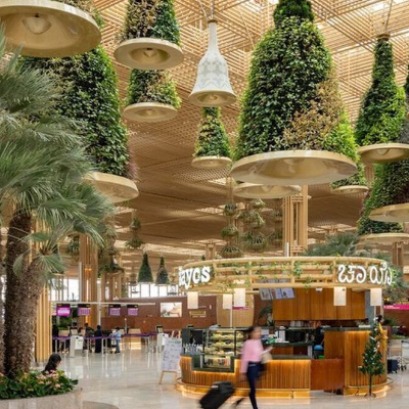
More wood | Air terminals as well-being spaces with design and natural atmosphere
In a world in which mental health, comprehensive well-being and connection with nature are increasingly urgent, wood appears as an increasingly chosen material to transform not only how we live, but also how we feel and move.
In the US, Canada, Indonesia, the Netherlands, and India, wood has already covered airports. "The advance of construction with structural wood in airports responds to three factors that are repeated in all the projects analyzed, the substantial reduction of CO2, the faster and cleaner construction, and the superior passenger experience. 1. Substantial reduction of CO2: Wood captures carbon during its growth. Replacing steel and concrete with industrialized wood reduces the embodied emissions in large buildings. scale.2. Faster and cleaner construction: Prefabrication allows large roofs and structures to be assembled with less noise, less waste and less construction time.3. Superior passenger experience: Biophilia once again takes center stage: interiors with visible wood, integrated gardens, green roofs and natural light reduce stress and improve visual and thermal comfort.Mass timber: trend-setting examplesIn different regions of the world, new airports and expansions are prioritizing sustainable projects with wood and vegetation:• Portland International Airport (United States): one of the largest mass timber projects in the country. Its new undulating wooden roof creates an “inner forest” feeling, with live trees and gardens inside the terminal.• Fort McMurray International (Canada): pioneer in the intensive use of CLT and glulam in a complete air terminal.• Banyuwangi International (Indonesia): bioclimatic design with green roof, natural ventilation and renewable materials.• Rotterdam The Hague (Netherlands): It incorporates extensive vegetated roofs, which improve thermal insulation and reduce the heat island effect.• Kempegowda International Airport (India): one of the most ambitious cases of a biophilic airport, with green walls, hanging gardens and wooded interior areas.Although the phenomenon is global, it has a key peculiarity: it is recent and growing rapidly, driven by climate regulations, carbon certifications, energy efficiency and the need to generate more human spaces for passengers and workers.What does this trend mean for ArgentinaFor CADAMDA, The expansion of these initiatives opens up a huge opportunity: • position the country as a supplier of certified industrial wood; • promote public and private infrastructure projects with a lower carbon footprint; logical in the global sustainability agenda. From CADAMDA they point out that the global trend confirms something that research and professional practice have been demonstrating for years: wood is not only a material for housing; it is a material for large-scale infrastructure, capable of reducing emissions, improving comfort and accelerating construction times. The world is moving towards more sustainable buildings, and wood is leading that path, even in airports, one of the most demanding sectors in terms of engineering and operation, the Chamber concludes.
IT MAY INTEREST YOU
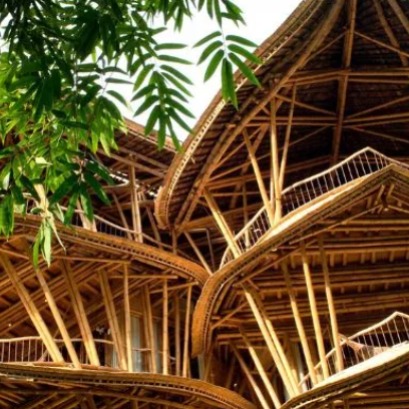 The South American country that changes construction thanks to an ancient, mega-resistant material: more than steel
This material that grows in South America creates the most resistant constructions and radically changes the world of architecture One particular building material has been used for millennia by various cultures in South America. This is due to its structural resistance that allows the creation of homes, bridges and shelters. Its archaeological presence shows that it was one of the most valued construction resources in seismic and humid areas.
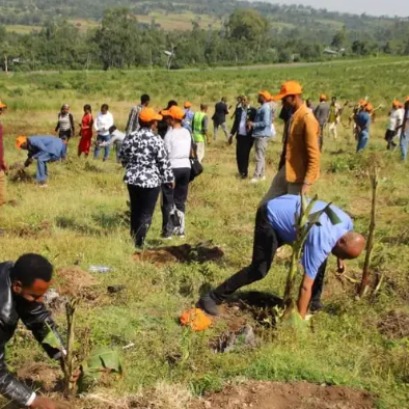 The country that planted 350 million trees in one day and caused great consequences
Discover the country that planted 350 million trees in one day and caused great consequences Climate change and deforestation have caused great ecological damage in many places. For this reason, a country planted 350 million trees in one day and thus obtained a world record, although it is estimated that in 2025, it will plant twice as many.
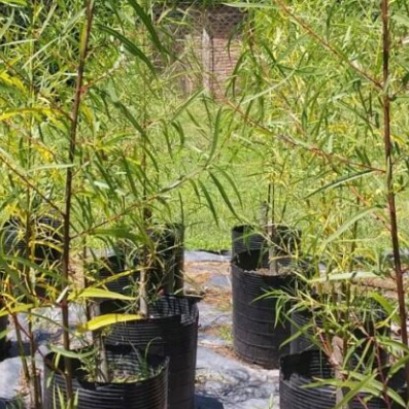 INTA Delta begins propagation of seven Creole willow clones for ecological restoration in Paraná
As a result of the rescue, domestication and registration work carried out by Teresa Cerrillo, a leading researcher in Salix Genetic Improvement, within the framework of the National Genetic and Forest Resources Programs of INTA, the multiplication and propagation of seven clones of Creole willow (Salix humboldtiana) began recently registered in the National Seed Institute (INASE) by INTA Delta del Paraná.