Specialists from 10 provinces develop forest landscape restoration strategies throughout the country
The program is developed by researchers from INTA, Conicet and the Argentine Wildlife Foundation.
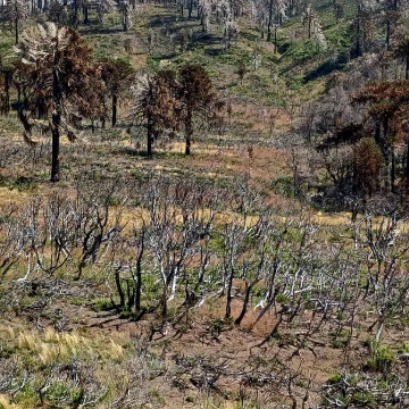
This is a national consultancy that arises from the ProCLIMA-AR project, a cooperation agreement between Argentina and Germany. The financing is German, explained the doctor in Forest Sciences, Mario Pastorino, researcher at INTA and Conicet. This consultancy has the participation of more than 20 researchers from 10 provinces. It happens that in recent years, he stated, information has been generated at an academic level on forest restoration, but today the idea is to translate that knowledge into practical protocols based on the various ecoregions of the country. There are different practices for each ecosystem in the country. For example, in a restoration and plantation in a burned forest of cypresses and coihues: what species can be planted and in what way? How to protect the soil from erosive processes such as rain and wind, when the vegetation cover has been lost due to fires?, said the forestry engineer. He mentioned that, in the face of fires in Patagonia, for example, it is advisable not to remove the burned material so that it protects the soil from erosive processes and the plants that are implanted naturally. or by man. All these decisions must be taken into account when carrying out restoration programs. Pastorino, responsible for the program in Patagonia, insisted that although there is knowledge, it is not summarized in a bibliography of practical uses for decision makers. The researchers have already begun to work in teams made up of regional references in restoration and they have a period of six months. The challenge is to develop a manual, a catalog of practices and propose standards and regulations based on the restoration of forest landscapes. This could be incorporated into the National Forest Law, which does not take into account the concept of forest landscapes, he noted. He warned that researchers review academic and so-called gray literature: We are talking about dissemination publications, technical reports about restoration experiences, that is, based on empirical knowledge that are a bridge of information. Its about seeing what things work and what doesnt. The problems are diverse in each region of the country. Chaco, for example, is strongly impacted by deforestation and degradation due to the burden of livestock farming in recent decades. There are illegal clearings that can be recovered, just like in the yunga jungles in Jujuy, Salta or Tucumán. In the Misiones jungle there is intensive production activity where small clearings are made for crops for a few years, Pastorino described. Patagonia, on the other hand, has suffered the impact of forest fires, although the pressure of livestock farming is also present. Livestock use of forest sites can be made under certain rules or technical prescriptions that allow it to be sustainable. Many times, this is not there: there is intensive and careless management that degrades the forest, he noted. In relation to the concept of forest landscapes, Pastorino added that various situations occur. On the one hand, he mentioned, it is about implementing restoration projects in the natural forest - which has no direct intervention by man -, with the aim of returning it to the condition prior to degradation. But, in addition, there are situations of cultural forest landscapes that have been modified by men. In this case, it is not about maintaining a forest landscape but rather rehabilitating the cultural landscape, as was the case of Mallín Ahogado, in El Bolsón, after the fire. An attempt is made to maintain the farms and production, but with trees.
IT MAY INTEREST YOU
 More wood | Air terminals as well-being spaces with design and natural atmosphere
In a world in which mental health, comprehensive well-being and connection with nature are increasingly urgent, wood appears as an increasingly chosen material to transform not only how we live, but also how we feel and move.
 The tallest palm tree in the world is in South America: it is the height of a 20-story building
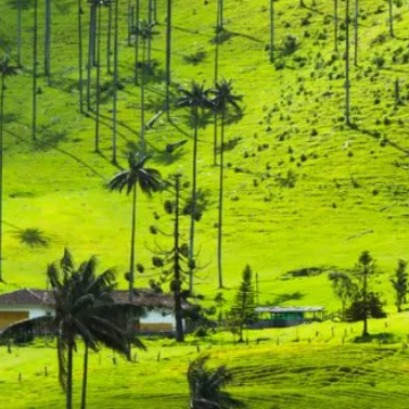
The worlds tallest palm tree stands deep in South America, a giant that challenges the limits of plant life Deep in South America, between the fog and the mountains, hides a giant tree that few know about. Majestic and silent, challenging the world on what plant life can achieve.
 Color the streets pink and white in spring: which is the most beautiful tree in the world and why, according to AI
Its delicate branches, the soft tones of its petals and the harmonious shape of the tree make it an almost poetic image.