San Juan | In the municipality of Calingasta they advance with a afforestation plan to improve the landscape and mitigate the wind with more than 350 willows planted in Barreal
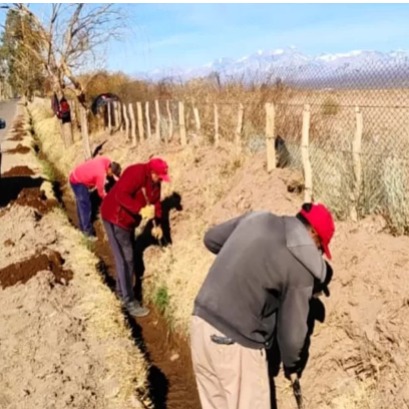
The municipality of Calingasta started with an important afforestation operation that seeks to improve both the landscape and the environment. In this context, they planted about 350 wills in different points of Barreal that will also serve with barrier to contain the zonda wind and strengthen the ground to contain the growing.
Diego Ossa, Secretary of Works, Services and Environment, said that Forestation will continue in other localities of the department. In addition, he asked the neighbors to take care of the new specimens to ensure their growth. A couple of week was carried out by this afforestation operation at different key points of Barreal with about 350 wills. The largest plantation was made on Libertad Street where, along 1.5 kilometers, 161 stakes of this specimen were placed, while another 25 were placed in the post of the rivers, and the rest was distributed between Echeverría street, In the Balcón de Ansilta neighborhood, and the South Costanera of the Los Patos River. In Barreal we have planted between 300 and 350 and also a significant amount of poplars. While in Tamboías we have placed 80 willow stakes on the Los Pioneros bridge where we are building the new spa. And we will continue with the afforestation in other locations so that Calingasta recovers the green of before, said Ossa. The official asked for the collaboration of the neighbors to take care of these stakes of vandalism so that they grow healthy and thus throw the first outbreaks in about 3 more months. He said that in about 5 years, if everything remains well, these trees will begin to shade. ?The main care that these specimens must have is that they do not break them because they were all planted in areas with irrigation by ditch so they will not miss water,? said the Secretary of Works. Wet Its leaves can be oval, serrated or elongated according to the species, also showing a large range of colors (between green and bluish). Today, it is common to take advantage of its wood for construction and cultivate them as an ornamental tree. Diego Ossa said that this species was chosen to forest barriers for the defenses offered before climatic adversities. ?Once grown up, its branch is intertwined and serves as a barrier to contain the winds, while their roots that form a kind of sponge, serve to strengthen the ground and contain the growing,? the official explained.
IT MAY INTEREST YOU
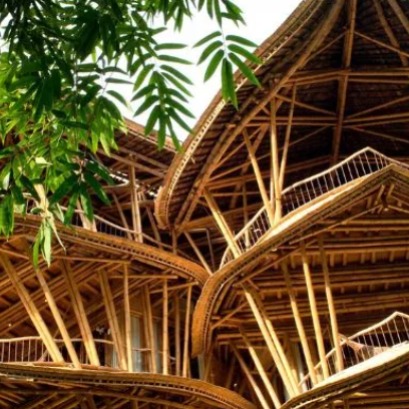 The South American country that changes construction thanks to an ancient, mega-resistant material: more than steel
This material that grows in South America creates the most resistant constructions and radically changes the world of architecture One particular building material has been used for millennia by various cultures in South America. This is due to its structural resistance that allows the creation of homes, bridges and shelters. Its archaeological presence shows that it was one of the most valued construction resources in seismic and humid areas.
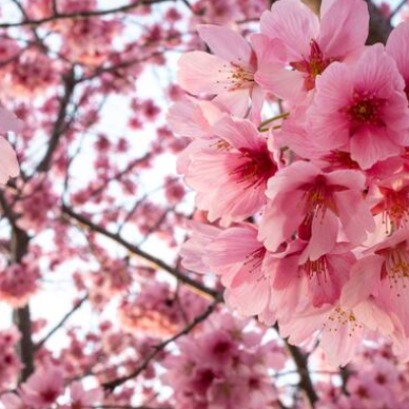 Color the streets pink and white in spring: which is the most beautiful tree in the world and why, according to AI
Its delicate branches, the soft tones of its petals and the harmonious shape of the tree make it an almost poetic image.
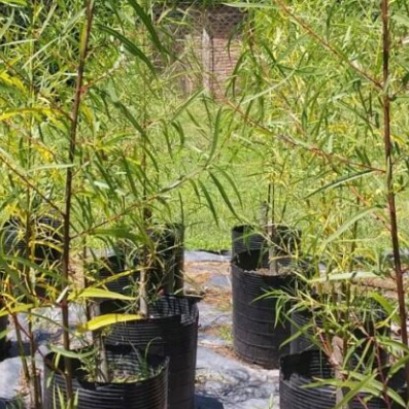 INTA Delta begins propagation of seven Creole willow clones for ecological restoration in Paraná
As a result of the rescue, domestication and registration work carried out by Teresa Cerrillo, a leading researcher in Salix Genetic Improvement, within the framework of the National Genetic and Forest Resources Programs of INTA, the multiplication and propagation of seven clones of Creole willow (Salix humboldtiana) began recently registered in the National Seed Institute (INASE) by INTA Delta del Paraná.