Misiones | Train control personnel to identify wood and combat illegal logging
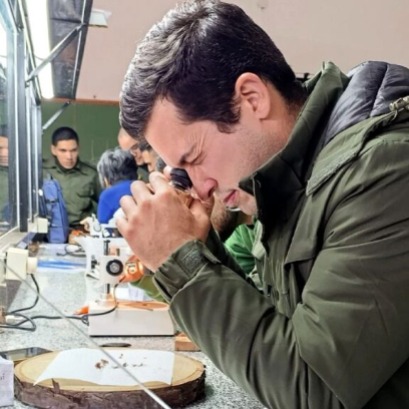
In an effort to reinforce environmental controls and prevent illegal traffic of forest products, technical training was developed on recognition of native and exotic woods of commercial value, in the Faculty of Forest Sciences of the National University of Misiones (UNAM), in Eldorado.
The workshop brought together technical personnel from the Forest Directorate of the Ministry of Ecology and Renewable Resources, as well as members of the Misiones Police - Directorate of Environment and Rural Crimes - and National Gendarmerie, who perform key functions in environmental control tasks. The activity had a practical approach, focused on the anatomical recognition of wood by means of visible characteristics to the naked eye or with a magnifying glass Rollizos, trozas and processed products. This tool is essential to verify the legality in the transport, use and marketing of forest resources. We bind concrete tools so that agents can detect irregularities immediately in the control operations, improving efficiency in the inspection, they indicated from the organization. The initiative is framed within the institutional strengthening plan of the Ministry of Ecology, which seeks to optimize the control mechanisms. The sustainable and legal use of natural resources in the province. With this training, Misiones advances in the development of technical capacities to protect their forests and combat illegal deforestation, reaffirming its commitment to the conservation of biodiversity and legality in the forest chain.
IT MAY INTEREST YOU
 The country that planted 350 million trees in one day and caused great consequences
Discover the country that planted 350 million trees in one day and caused great consequences Climate change and deforestation have caused great ecological damage in many places. For this reason, a country planted 350 million trees in one day and thus obtained a world record, although it is estimated that in 2025, it will plant twice as many.
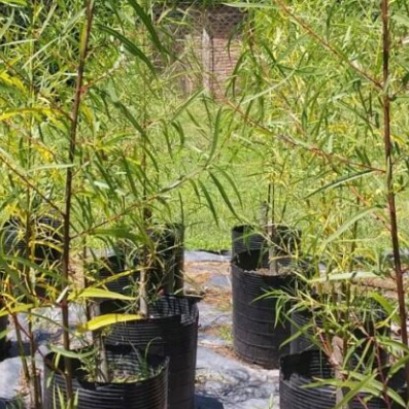 INTA Delta begins propagation of seven Creole willow clones for ecological restoration in Paraná
As a result of the rescue, domestication and registration work carried out by Teresa Cerrillo, a leading researcher in Salix Genetic Improvement, within the framework of the National Genetic and Forest Resources Programs of INTA, the multiplication and propagation of seven clones of Creole willow (Salix humboldtiana) began recently registered in the National Seed Institute (INASE) by INTA Delta del Paraná.
 More wood | Air terminals as well-being spaces with design and natural atmosphere
In a world in which mental health, comprehensive well-being and connection with nature are increasingly urgent, wood appears as an increasingly chosen material to transform not only how we live, but also how we feel and move.