
Argentines, Brazilians and Uruguayans with a common goal: they verified that forest improvement with DNA studies can be accelerated and without the need to go to the field
The genetic improvement of animals and plants is a process as silent as extensive. Especially in the case of trees, which can take decades to express their characteristics and slow down the choice, a key step to obtain overcoming species. A recent study of INTA researchers, Conicet, Embrapa (Brazil) and UPM-Forestal Eastern (Uruguay) proposes a mechanism to accelerate it and make it less expensive.
Actually, they discovered that it is effective to apply genomic selection, already used in other fields, to forest improvement. That is to say, instead of delaying years in field observation to evaluate the growth and quality of the wood, DNA information can be used to make predictions and accelerate the selection process. The work entitled ?Genomic Selection in Forest Trees Comes to Life: Unraveling ITS Potential in An Advanced Four-generation, published in the magazine Frontiers in Plant Science, evaluates four generations of four generations of Eucalyptus grandis to see how likely it is to anticipate the growth in volume, the density of the wood and the performance of pulp only with genomic and phenotypic data of previous generations of the tree. This study highlights the enormous potential of the genomic selection to make more efficient the improvement of the trees, reducing costs, evaluation times, and allowing to select superior individuals with greater precision, said the researcher Eduardo Eduardo Eduardo Eduardo Eduardo Eduardo Eduardo Eduardo CAPPA, which belongs to INTA and CONICET. More than 34,000 trees with three -year growth data were evaluated, and the only one of the aspects that were difficult to estimate is volume growth. that these advances have for the forestry sector, since they can reduce or eliminate the long and expensive field tests, in which the offspring is evaluated.
IT MAY INTEREST YOU
 INTA Delta begins propagation of seven Creole willow clones for ecological restoration in Paraná
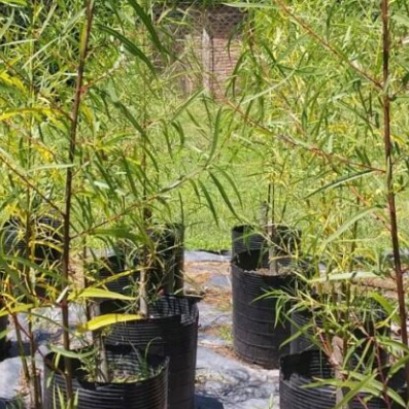
As a result of the rescue, domestication and registration work carried out by Teresa Cerrillo, a leading researcher in Salix Genetic Improvement, within the framework of the National Genetic and Forest Resources Programs of INTA, the multiplication and propagation of seven clones of Creole willow (Salix humboldtiana) began recently registered in the National Seed Institute (INASE) by INTA Delta del Paraná.
 Reforestation advances in the Historic Sanctuary of Machu Picchu with new restored hectares
The plan includes the planting of a thousand new trees in the sanctuary, in response to the damage caused by forest fires and environmental threats, with the support of local authorities and representatives of the tourism sector.
 Color the streets pink and white in spring: which is the most beautiful tree in the world and why, according to AI
Its delicate branches, the soft tones of its petals and the harmonious shape of the tree make it an almost poetic image.