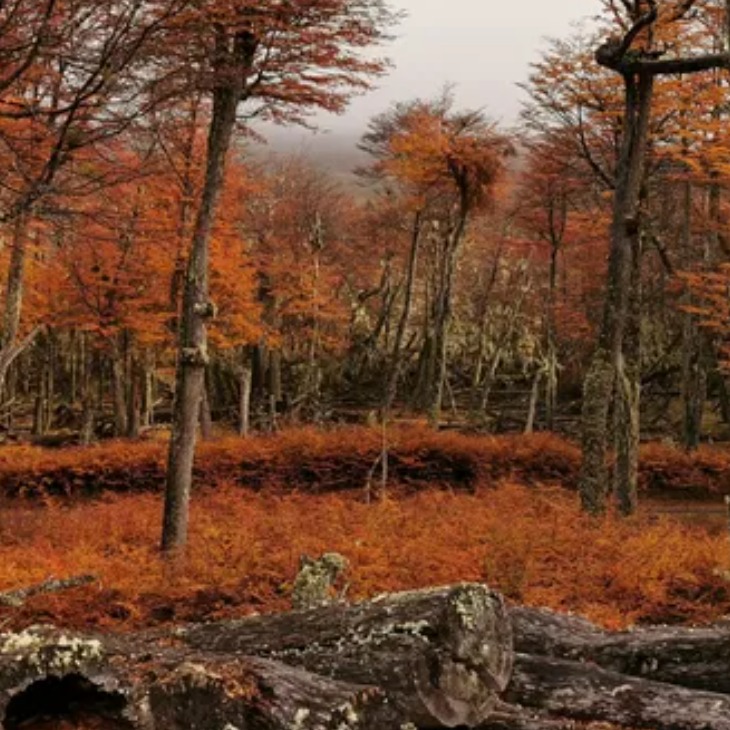
One of the oldest trees in Patagonia, in danger of disappearing
An Argentine scientific team demonstrated how the temperature increase affects one of the most emblematic trees in Patagonia for the end of this century, climatic models predict that the temperatures of the high areas of the Patagonian mountains will be similar to those that the valleys and lakes of lower altitude have today. Given this scenario, a Conicet research team set out to evaluate the possibilities of adapting the lenga (Nothofagus pumilio), a typical tree species of the high regions of the northern Patagonia and fundamental for the Andean ecosystem.
A key issue is to understand how the increase in temperatures will affect the roads that regulate the expression of ecologically relevant characters in the trees that form the forests, explained Dr. Verónica Arana, of the Institute of Forest and Agricultural Research of Bariloche (IFAB), in an article published in the New Phytologist. circadian watches of plants. As in humans, these watches function as an internal pacemaker that adjusts biological processes to environmental cycles. However, until now it was not clear how the temperature influenced its functioning and plant behavior within natural ecosystems. A laboratory study and in the forest the team of researchers, led by Arana and with the participation of doctors Maximilian Estravis-Barcala and Marcelo Yanovsky, compared the behavior of two species: the slong, characteristic of cold and high areas obliqua), which lives in lower and warm regions. To evaluate the operation of circadian watches, they conducted experiments in controlled laboratory conditions, where they analyzed the expression of circadian clock genes in seedlings exposed to different temperatures and light conditions. In addition, they brought seedlings of both species to different altitudes in the mountain (680 and 1340 meters), where they left them for a month and took periodic samples of leaves every three hours for two consecutive days. Finally, at the close of the season, they analyzed the growth and mortality of the plants in each environment. Results worrying experiments showed that the circadian clock of the Pellín oak, adapted to warm climates, maintained its operation in both environments. Instead, the one of the Lenga was affected when exposed to higher temperatures. This translated into a greater mortality of the lenga in the warm areas, which suggests that the species could face difficulties in regenerating in the future marked by global warming. The loss of circadian clock function was associated with a greater mortality of the specimens, Arana explained. Since climatic models estimate that by the end of this century temperatures in the high areas of the forest will be similar to the current ones in the low zone, the lenga could show serious difficulties in regenerating, at least in northern Patagonia. A path to conservation so well the findings are worrying, they also open new opportunities for research and conservation. The identification of the circadian clock genes in these trees, something that was unknown until now, and the study of their behavior in temperature response, constitute the first pillars for future adaptation strategies, Arana said. One of the teams objectives is to identify genetic variants that provide stability to the circadian clock at high temperatures, which could help select more heat resistant specimens. In this sense, the research group works on the development of biotechnological lines of plants within the framework of the INTA biotechnology program. However, cuts in research financing could hinder these advances. We had the financing of scientific and technological research projects (PICTS) of the National Research Promotion Agency, but they are currently detained, lamented the scientist. The study puts on the table the urgency of addressing the challenges of climate change from scientific research and the conservation of key species in Patagonian ecosystems. The Lenga, a symbol of the Andean forests, could face an uncertain future if no measures are taken on time.
IT MAY INTEREST YOU
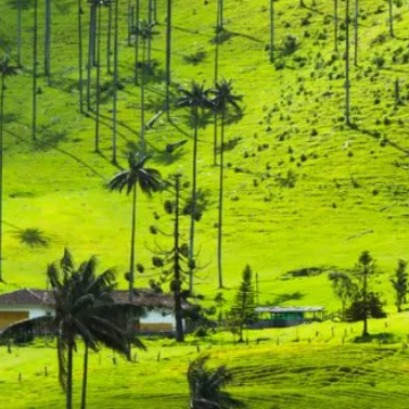 The tallest palm tree in the world is in South America: it is the height of a 20-story building
The worlds tallest palm tree stands deep in South America, a giant that challenges the limits of plant life Deep in South America, between the fog and the mountains, hides a giant tree that few know about. Majestic and silent, challenging the world on what plant life can achieve.
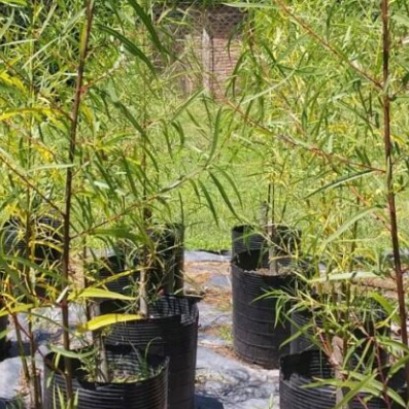 INTA Delta begins propagation of seven Creole willow clones for ecological restoration in Paraná
As a result of the rescue, domestication and registration work carried out by Teresa Cerrillo, a leading researcher in Salix Genetic Improvement, within the framework of the National Genetic and Forest Resources Programs of INTA, the multiplication and propagation of seven clones of Creole willow (Salix humboldtiana) began recently registered in the National Seed Institute (INASE) by INTA Delta del Paraná.
 Nation reinforces prevention and training against forest fires
The director of the Federal Emergency Agency (AFE), Santiago Hardie, referred to the support that the Nation provides in fighting fires. He argued that the majority of igneous sources respond to human interventions and that, therefore, social awareness is a central tool to reduce environmental, material and human damage.