Patagonia Argentina | Researchers assert that the native forests of Ñire are resistant to climate change
The response capacity and vulnerability of forests to drought and climate change vary between different biomes. Knowing the responses of trees to drought provides key information about forest resilience and changes in species distribution. We share the analysis of specialists from INTA Argentina, Pablo Peri.
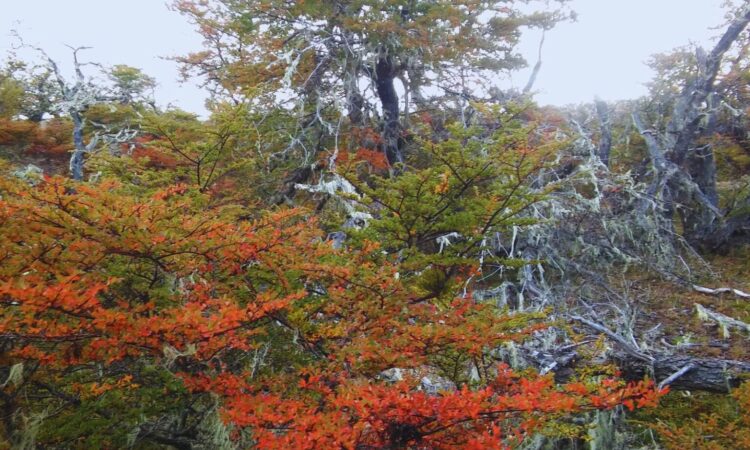
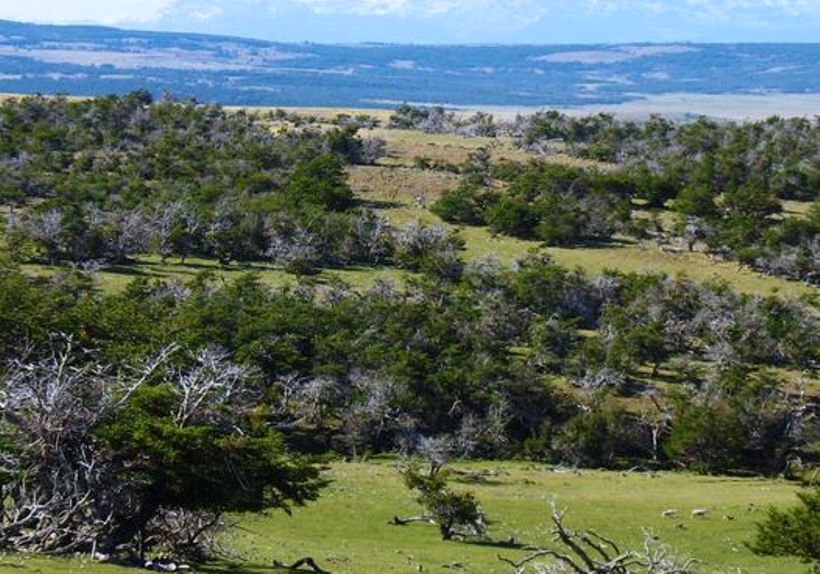
The ñire is a native forest species that adapts to a wide variety of environmental conditions, it is found both in places with excess humidity and in dry places. This determines its wide distribution throughout Patagonia.
For this reason, a research team - made up of specialists from Argentina and Chile - carried out an investigation to find out the response of the Ñires (Nothofagus antartica) in the face of a climate change scenario. In this sense, the researchers tested the hypothesis that populations of trees that thrive in dry environments are more resistant to drought than those that grow in humid places.
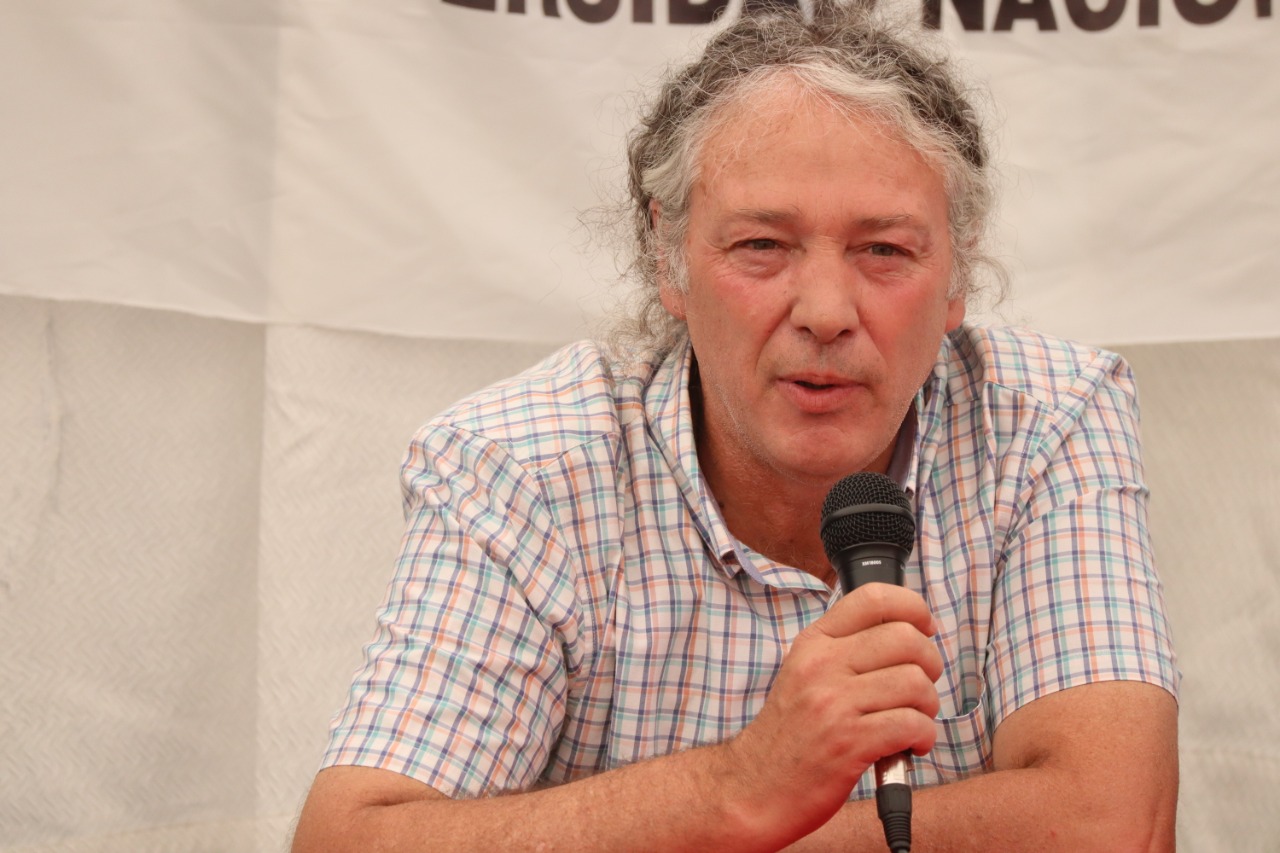
Pablo Peri, coordinator of the INTA National Forest Program and one of those responsible for the research, pointed out that “the Nothofagus antartica forests were evaluated in an annual precipitation range of 500 to 2000 millimeters of rain,” and specified that at this analysis added “data on drought events in recent decades.”
“The ñire trees were not significantly affected in their growth, which indicates that it is a species that adapts to climate change events, increasing the efficiency of water use,” added Peri.
To understand the response of ñire forests to drought, the researchers determined temporal trends in radial trunk growth in 12 populations located along a strong precipitation gradient (annual precipitation of 500–2000 mm) in Chile and Argentina. .
Using dendrochronological methods, models were fitted to predict the annual increase in basal area as a function of year and drought.
They also measured carbon and oxygen isotope signals and estimated intrinsic water use efficiency to provide possible physiological causes for tree growth responses to drought.
The work demonstrates that all populations, regardless of site humidity, showed an increase in their intrinsic water use efficiency in recent decades, a trend that seems to be explained by an increase in photosynthetic rate rather than induced stomatal closure. because of the drought.
For Peri, “the absence of negative effects induced by drought on the growth of ñire trees in a tree species with a wide niche breadth is promising because it could be related to the mechanisms that tree species have to face drought events. drought".
In this sense, the researcher pointed out that "in the work we suggest that the drought resistance of Nothofagus antartica could be attributed to its short stature and relatively low growth rate."
The INTA, the Austral Center for Scientific Research (CADIC), the National Council for Scientific and Technical Research (Conicet), the University of Talca, the Patagonian Ecosystem Research Center (CIEP), the Pyrenean Institute of Ecology (IPE-CSIC) participated in the work. ), Spain Institut für Geographie, Friedrich-Alexander-Universität, Erlangen-Nürnberg.
The work “ 𝑙𝑒𝑠 𝑑𝑒 𝑛̃𝑖𝑟𝑒 𝑟𝑒𝑙𝑎𝑐𝑖𝑜𝑛𝑎𝑑𝑜 𝑎𝑙 𝑐𝑎𝑚𝑏𝑖𝑜 𝑐𝑙𝑖𝑚𝑎́𝑡𝑖𝑐𝑜” was published in the international journal Annals of Botany and is available at https://academic.oup.com/aob/article/131/6/941/7095679

IT MAY INTEREST YOU
 Nation reinforces prevention and training against forest fires
The director of the Federal Emergency Agency (AFE), Santiago Hardie, referred to the support that the Nation provides in fighting fires. He argued that the majority of igneous sources respond to human interventions and that, therefore, social awareness is a central tool to reduce environmental, material and human damage.
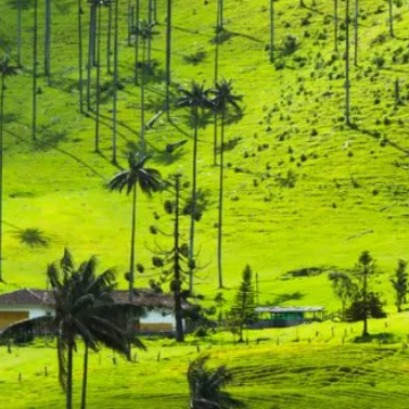 The tallest palm tree in the world is in South America: it is the height of a 20-story building
The worlds tallest palm tree stands deep in South America, a giant that challenges the limits of plant life Deep in South America, between the fog and the mountains, hides a giant tree that few know about. Majestic and silent, challenging the world on what plant life can achieve.
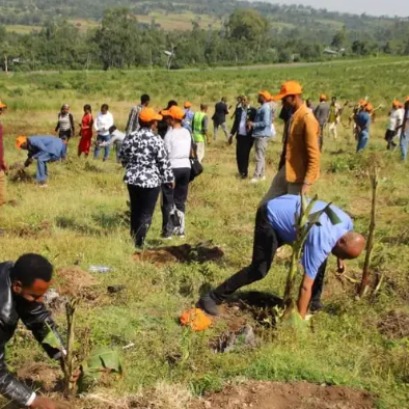 The country that planted 350 million trees in one day and caused great consequences
Discover the country that planted 350 million trees in one day and caused great consequences Climate change and deforestation have caused great ecological damage in many places. For this reason, a country planted 350 million trees in one day and thus obtained a world record, although it is estimated that in 2025, it will plant twice as many.