
“Housing emergency plan” in Chile
In Chile, the “Housing Emergency Plan” contemplates the construction of industrialized wooden houses. The Ministry of Housing plans to deliver 260,000 homes in the next four years, taking into account wood as an input capable of achieving said objective thanks to its benefits of provision, construction and speed of construction, to alleviate an estimated deficit of 650,000 homes. Within the framework of this plan, the "Regional Plan for the industrialization of wooden housing" arises, projecting high-quality constructions. It is proposed to have the planning of a thousand homes as soon as possible, in conditions to be installed in different parts of the country. An important issue is the promotion of the use of standardized and labeled sawn timber, allowing greater productivity and better quality control. The beginning of the acquisition process of a group of industrialized wooden buildings in San Pedro de la Paz has already been announced, which will be used for rent and will have 80 apartments of 43 and 54 m2. Source: Madera21


IT MAY INTEREST YOU
 More wood | Air terminals as well-being spaces with design and natural atmosphere
In a world in which mental health, comprehensive well-being and connection with nature are increasingly urgent, wood appears as an increasingly chosen material to transform not only how we live, but also how we feel and move.
 Color the streets pink and white in spring: which is the most beautiful tree in the world and why, according to AI
Its delicate branches, the soft tones of its petals and the harmonious shape of the tree make it an almost poetic image.
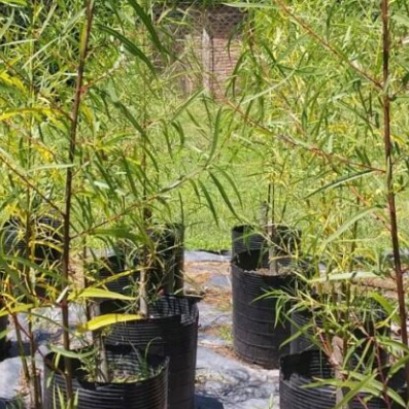 INTA Delta begins propagation of seven Creole willow clones for ecological restoration in Paraná
As a result of the rescue, domestication and registration work carried out by Teresa Cerrillo, a leading researcher in Salix Genetic Improvement, within the framework of the National Genetic and Forest Resources Programs of INTA, the multiplication and propagation of seven clones of Creole willow (Salix humboldtiana) began recently registered in the National Seed Institute (INASE) by INTA Delta del Paraná.