Forest days in Entre Ríos
Concordia Agricultural Experimental Station of INTA. Route 22 and vv. ff.
Dates and times:
Thursday, October 13 from 1:00 p.m. to 7:00 p.m.
Friday, October 14 from 8:30 a.m. to 12:30 p.m.
Face-to-face modality
Concordia Agricultural Experimental Station of INTA. Route 22 and vv. ff.
PROGRAM
Thursday, October 13: Dissertations in the INTA Concordia room
13.0 -13.30: Registration
13.30 -14.00: Welcome (authorities)
14.00 -15.00: Fire Management Panel
Rural Fire Management Network. Juan Manuel García Conde (Delta Consortium Coordinator)
Provincial Fire Management Plan of Entre Ríos. Mauro Rodríguez (Coordinator of Entre Ríos Provincial Fire Management Plan)
Strategies for fighting fires in the province of Corrientes. Roberto Rojas (Director of Forest Resources of Corrientes)
Information for comprehensive fire management. Nicolás Mari (INTA Cruz del Eje Agency, Prof. Gulich Institute and member of CONAE).
15.00 -15.20: Report on carbon survey in soils of productive systems in Argentina, with emphasis on Mesopotamia. Javier Gyenge (CONICET, INTA AER Tandil) and Mario Flores (Industrial Forest Development Directorate MAGyP)
15.20 - 15.40: Technological tools applied to forestry production. Matías Gaute (Directorate of Forestry Production, MAGyP).
15.40 - 16.00 Questions to the Panel
16.00 - 17.00: Break: coffee and poster exhibition / tour of stands
17.00 - 17.40: Biodiversity in planted forests of Mesopotamia and Delta: potential benefits for the forestry business. Natalia Fracassi (INTA Delta), Gustavo Zurita (IBS-Misiones National University-CONICET) and Julieta Filloy (IEGEBA, University of Buenos Aires-CONICET)
17.40 - 18.10: Potential of pure clones and hybrids of Eucalyptus for charcoal production. Natalia Raffaeli (National University of La Plata) and Juan Marcelo Gauna (National University of La Plata).
18.10 - 18.30: Certification of carbon bonds under the VSC standard, in UNITAN forest plantations. José Ignacio Otarán (UNITAN, Province of Chaco)
18.30 - 18.50: Evaluation of the economic and social impact of the pine and eucalyptus forestry chain, from a market perspective. Pedro Botta Olaciregui (Specialized consultant, Province of Corrientes)
18.50 - 19.00: Questions to the panel. Closing first day.
Friday, October 14: Field Day
8.30: Meeting of the EEA Concordia main building
Tour of batches and trials of the EEA Concordia, where the topics will be developed:
9.00 - 9.40: Ant control test with repellents and trap plants. Sergio Ramos (INTA Concordia), Carmen Hernández- Andrea Andorno (IMyZA, INTA Castelar).
9.40 -10.10: State-of-the-art technological tools for forest application. Juan Feldkamp and Emilio Montefinale (Feldkamp Studio, Gualeguaychú, Entre Ríos)
10.10 -10.20: Questions.
10.20 -11.00: Coffee
11.0 - 11.15: Risk prevention in forestry. Quadripartite Table of Entre Ríos.
11.15 -11.45: Results of the “Pre-commercial clone evaluation network”. Leonel Harrand (INTA Concordia)
11.45 - 12.15: Technological properties of eucalyptus clones. Matías Martínez (INTA Concordia).
12.15 - 12.30: Questions
12.30: Closing with lunch
Registration cost:
Overall: $3,000.
Students: $1500.
Reports:
INTA Concordia website: inta.gob.ar/concordia
Ing. María de los Ángeles García – garcia.mariaa@inta.gob.ar, Ing. Sergio Ramos – ramos.sergio@inta.gob.ar

IT MAY INTEREST YOU
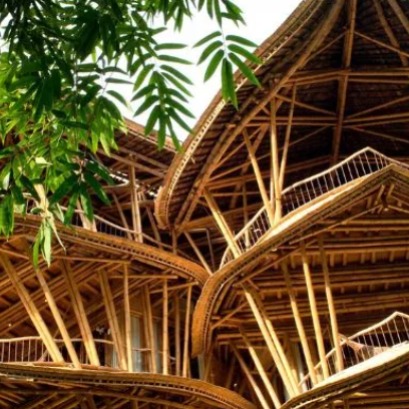 The South American country that changes construction thanks to an ancient, mega-resistant material: more than steel
This material that grows in South America creates the most resistant constructions and radically changes the world of architecture One particular building material has been used for millennia by various cultures in South America. This is due to its structural resistance that allows the creation of homes, bridges and shelters. Its archaeological presence shows that it was one of the most valued construction resources in seismic and humid areas.
 The DNA of forests: they discover what makes a tree resist drought
An international team, with the participation of INTA and Conicet, discovered that genetics can be decisive for trees to better resist droughts
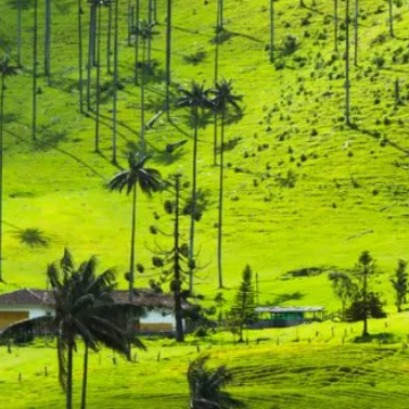 The tallest palm tree in the world is in South America: it is the height of a 20-story building
The worlds tallest palm tree stands deep in South America, a giant that challenges the limits of plant life Deep in South America, between the fog and the mountains, hides a giant tree that few know about. Majestic and silent, challenging the world on what plant life can achieve.