Industry is the appropriate tool to promote social development
The post-pandemic world will be remembered as the most important instance of reflection in modern social history, a time from which humanity will have to rethink its uses and customs to tend towards a better quality of life.
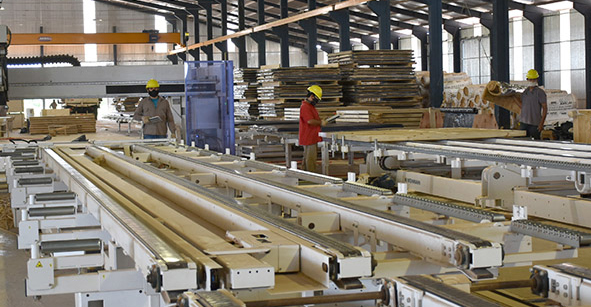
Almost all forms of work were aggiornated and the industry was not immune to this trend. New protocols shaped all areas, the emergence of other forms of production was observed, and a period of strengthening and sustained growth is looming for the industry itself.
The world will require full operation to make up for lost time, and societies in general hope to achieve in the short term -at least- levels of employment similar to those of the beginning of the pandemic, with the virtues inherent in this way production: quality employment, wealth distribution and better living standards.
In this general framework, this September 2 "Industry Day" (date that commemorates the first Argentine export, carried out in 1857) can serve to highlight the importance of our activity for modern societies. A country with a strengthened industry guarantees less dependence on the fluctuations of international commodity prices; attracts investment, stimulates development, the incorporation of technologies and exports; consolidates the domestic market; generates wealth and improves its distribution; promotes quality employment, its formality and permanent training; and increases salary levels, among other virtues.
For this reason, industry is the most effective tool to promote social development, and the indicated engine to boost the internal economy, generating wealth, employment and inclusion for the population as a whole.
This consideration does not apply only to the local level. A report by the United Nations Industrial Development Organization (UNIDO) -an organ created within the UN to promote and accelerate industrialization in developing countries- demonstrates “how the industrialization process is directly and quantifiably related to a better quality of life".
The entrepreneurial spirit - the basis for all initiatives, even industrial ones - requires the convergence of various factors. The resource for the necessary investment, the vision of the opportunity and the productive efficiency to improve competitiveness are the first to emerge in the collective imagination, but it is also essential to have a suitable framework that encourages the project. In this regard, the role of the State becomes essential, both when establishing the necessary conditions and generating the most agile and dynamic channels for the development of the proposal: legal security, fiscal stability, updated legislation and clear rules. are some of them.

IT MAY INTEREST YOU
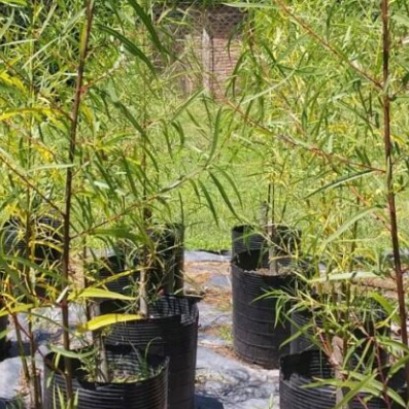 INTA Delta begins propagation of seven Creole willow clones for ecological restoration in Paraná
As a result of the rescue, domestication and registration work carried out by Teresa Cerrillo, a leading researcher in Salix Genetic Improvement, within the framework of the National Genetic and Forest Resources Programs of INTA, the multiplication and propagation of seven clones of Creole willow (Salix humboldtiana) began recently registered in the National Seed Institute (INASE) by INTA Delta del Paraná.
 Nation reinforces prevention and training against forest fires
The director of the Federal Emergency Agency (AFE), Santiago Hardie, referred to the support that the Nation provides in fighting fires. He argued that the majority of igneous sources respond to human interventions and that, therefore, social awareness is a central tool to reduce environmental, material and human damage.
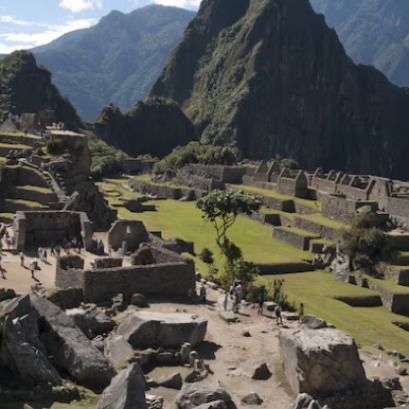 Reforestation advances in the Historic Sanctuary of Machu Picchu with new restored hectares
The plan includes the planting of a thousand new trees in the sanctuary, in response to the damage caused by forest fires and environmental threats, with the support of local authorities and representatives of the tourism sector.