Primeros bio-tejidos más fuertes que el acero a partir de nanocelulosa de eucalipto
Se trata de una microfibra de celulosa, imperceptible al ojo humano, que ya despierta el interés de empresas privadas del país por sus características únicas: liviana, impermeable y biodegradable.
Se trata de una microfibra de celulosa, imperceptible al ojo humano, que ya despierta el interés de empresas privadas del país por sus características únicas: liviana, impermeable y biodegradable. Con una resistencia incluso superior al kevlar, material que se utiliza en chalecos antibalas, aviones de combate y trajes espaciales, la nanocelulosa podría retardar la acción del fuego si se le agrega algún aditivo.
Pensar en que un material extraído desde la médula de microfibras de eucalipto podría ser más resistente que el acero o el titanio, además de biodegradable, era –hasta hace algunos años- una quimera. No obstante, la nanocelulosa, también conocida como el súper material del futuro, ha dado pasos agigantados en nuestro país de la mano de científicos y estudiantes del Centro de Biomateriales y Biotecnología (CBN) de laUniversidad del Biobío, en Concepción.
De acuerdo a las cifras del Instituto Forestal, en Chile existen 16,7 millones de hectáreas de bosque lo que representa el 23,2% del territorio nacional. De este porcentaje, 2,4 millones de hectáreas corresponden a bosque plantado y, de ellas, el 0,8 % son eucaliptos. Es precisamente esta riqueza forestal la que llevó a investigadores chilenos a asumir el desafío de adentrarse en las nuevas oportunidades que otorga la madera y crearon un film o bio-tejido basados en la nanotecnología, entendida como el conjunto de técnicas para manipular y controlar la materia a nivel de nanómetro, es decir, imperceptible al ojo humano.

IT MAY INTEREST YOU
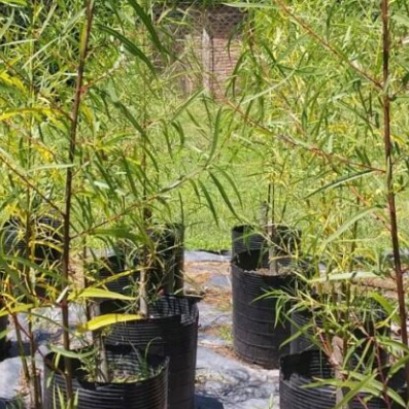 INTA Delta begins propagation of seven Creole willow clones for ecological restoration in Paraná
As a result of the rescue, domestication and registration work carried out by Teresa Cerrillo, a leading researcher in Salix Genetic Improvement, within the framework of the National Genetic and Forest Resources Programs of INTA, the multiplication and propagation of seven clones of Creole willow (Salix humboldtiana) began recently registered in the National Seed Institute (INASE) by INTA Delta del Paraná.
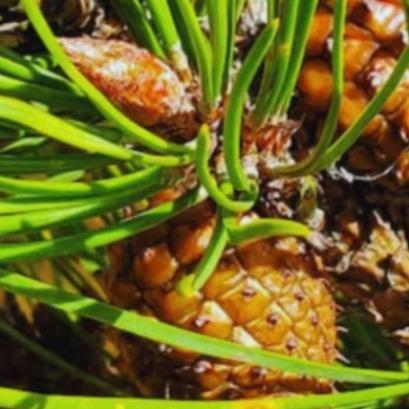 The DNA of forests: they discover what makes a tree resist drought
An international team, with the participation of INTA and Conicet, discovered that genetics can be decisive for trees to better resist droughts
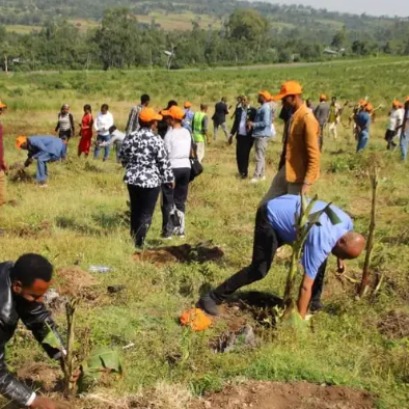 The country that planted 350 million trees in one day and caused great consequences
Discover the country that planted 350 million trees in one day and caused great consequences Climate change and deforestation have caused great ecological damage in many places. For this reason, a country planted 350 million trees in one day and thus obtained a world record, although it is estimated that in 2025, it will plant twice as many.