.jpg)
Fábrica de árboles: generan 6.000 por año para cambiar el paisaje verde de la Ciudad
Trabajan en la Reserva Ecológica y en el Parque Avellaneda para renovar los ejemplares que están en veredas y parques. Los expertos dicen que la arboleda actual está desactualizada.
“La arboleda quedó desactualizada. Los plátanos dan alergia, las tipas se caen y hay tantos fresnos que si un hongo los enferma perdemos la mitad de los ejemplares”, dice Jorge Serángelo, un técnico botánico con más de 30 años entre árboles. Trabaja en el Parque Avellaneda dentro de una cúpula de varillas flexibles y cubierta de lona. La llaman domo y guarda 1.000 ejemplares distribuidos en macetas negras de distintos tamaños y decenas más, que aún son semilla y esperan su germinación en bandejas llenas de compost y sustrato de río. La cúpula tiene estética de ciencia ficción: blanca y de bordes metálicos, hecha sobre el esqueleto de un viejo tanque australiano.

IT MAY INTEREST YOU
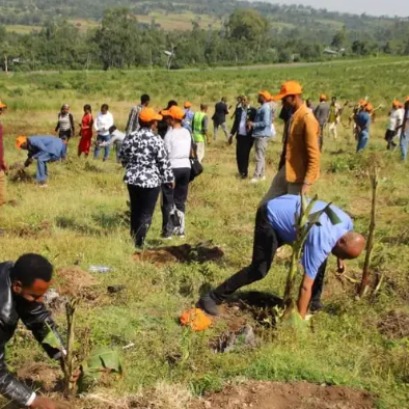 The country that planted 350 million trees in one day and caused great consequences
Discover the country that planted 350 million trees in one day and caused great consequences Climate change and deforestation have caused great ecological damage in many places. For this reason, a country planted 350 million trees in one day and thus obtained a world record, although it is estimated that in 2025, it will plant twice as many.
 Nation reinforces prevention and training against forest fires
The director of the Federal Emergency Agency (AFE), Santiago Hardie, referred to the support that the Nation provides in fighting fires. He argued that the majority of igneous sources respond to human interventions and that, therefore, social awareness is a central tool to reduce environmental, material and human damage.
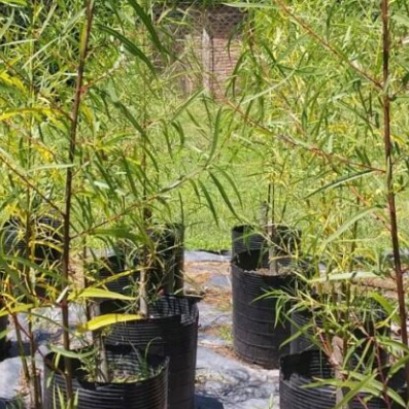 INTA Delta begins propagation of seven Creole willow clones for ecological restoration in Paraná
As a result of the rescue, domestication and registration work carried out by Teresa Cerrillo, a leading researcher in Salix Genetic Improvement, within the framework of the National Genetic and Forest Resources Programs of INTA, the multiplication and propagation of seven clones of Creole willow (Salix humboldtiana) began recently registered in the National Seed Institute (INASE) by INTA Delta del Paraná.